
Bachelor of Science in Bioengineering
Bachelor of Science in Bioengineering
Overview
Northeastern University’s Bioengineering Program provides a broad-based, interdisciplinary engineering curriculum that offers a rigorous yet flexible education. The goal of the curriculum for the Bachelor of Science (BS) in Bioengineering is to provide students with a broad understanding of the quantitative analysis of biological systems and a deep expertise in an area of engineering of their choice.
Innovative Curriculum
Students begin their education by acquiring a common base of knowledge in engineering that includes fundamental science and mathematics; instrumentation, measurement and imaging skills; quantitative physiology; and biomechanics. In the more advanced courses, students learn to design and analyze biomolecular systems from the viewpoint of multiple disciplines, to understand the dynamical behavior of natural and synthetic bioelectrical networks, and the processing and separation of biological materials.
After completing the Bioengineering Core, students choose one of three bioengineering concentrations to focus on: Cell and Tissue Engineering, Biomechanics, or Biomedical Devices and Bioimaging. General electives are available to complement their engineering knowledge with valuable courses in the arts, languages, social sciences, public health, business, broader engineering and computer science disciplines, and related fields.
The Bioengineering curriculum culminates in a two semester-long capstone design project in the senior year. In this project, students are asked to apply their knowledge and experience to a real-world design problem and develop feasible solutions.
Accelerated Master’s Degree PlusOne Program
The Accelerated Master’s Degree PlusOne program allows current undergraduate students to accelerate the attainment of the master’s degree by applying graduate credits taken as an undergraduate toward both the undergraduate and graduate degrees. Current students apply to enroll in the PlusOne program. Students attain their bachelor’s degree followed by a PlusOne year to complete the master’s degree.
Students currently earning a BS in Bioengineering can select from the below MS degree PlusOne pathways.
Concentrations
Students accepted to the Bachelor of Science in Bioengineering program have four concentrations from which to choose.
View Molecular, Cell, and Tissue Engineering Curriculum Requirements
View description of the Systems, Synthetic, and Computational Bioengineering Concentration.
View Systems, Synthetic, and Computational Bioengineering Curriculum Requirements
Experiential Learning
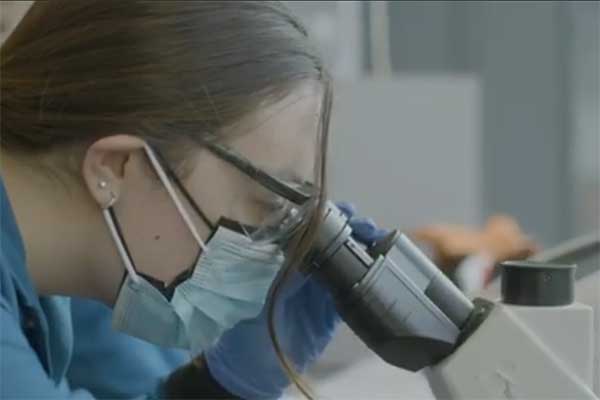
Experiential learning is the heart of a Northeastern education, combining rigorous coursework with hands-on experience in the classroom, in the lab, and in the field—locally and abroad. With our signature cooperative education (co-op) program, students typically gain six months of work experience integrated as part of the educational program. Both five-year, three-co-op and four-year, two-co-op program options are available.
Academic Advising
For support with academic questions, contact the academic advisor assigned to this program.
Admissions & Aid
Ready to take the next step? Review Degree Requirements to see courses needed to complete this degree. Then, explore ways to pay for your education. Finally, review Admissions Information to see our deadlines and gather the materials you need to Apply.
Student News

Improving the Smell of Composting
A team of bioengineering students are participating in the International Genetically Engineered Machine Foundation global competition that showcases synthetic biology projects. The iGEM student team is developing a solution that would make compost smell like mint and lavender by targeting the microbial process. They also recently received a PEAK Experience Award from Northeastern.

Knight-Hennessy Scholarship Recipient Strives To Raise Malaria Awareness
Kritika Singh, E’20, bioengineering, has been awarded the Knight-Hennessy Scholarship, which will enable her to pursue a doctor of medicine degree at Stanford University. She received the Rhodes Scholarship in 2020.
First-Year Engineering Students Work With Client on Real-World Project
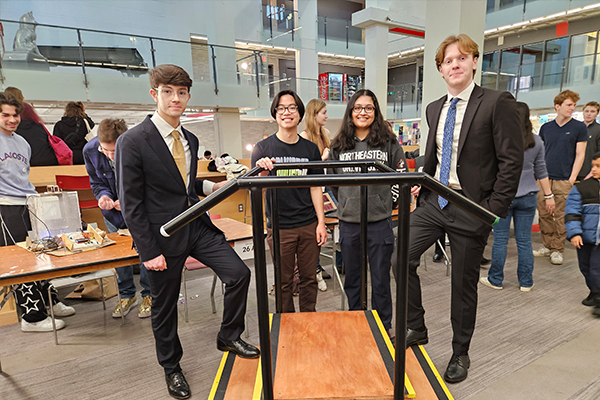
For their Cornerstone of Engineering course project, a group of first-year engineering students in Boston designed and built a set of portable rehabilitation stairs to address a real-world challenge of a hospital in Maine, as part of a collaboration with Northeastern’s Roux Institute in Portland, Maine.
Goldwater Scholar Shares Her Research Experiences
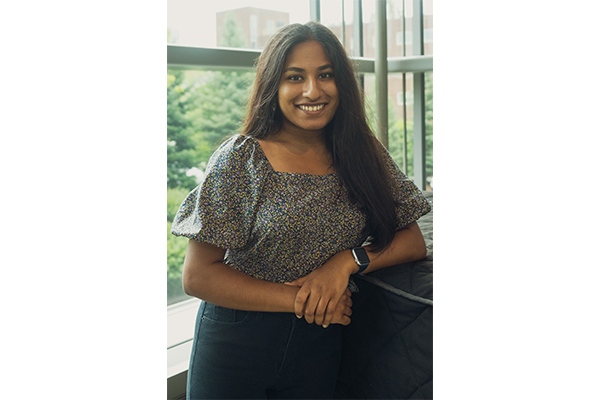
Kaitlyn Ramesh, E’25, bioengineering, received the prestigious 2024 Barry Goldwater Scholarship for her undergraduate research in the Lu Lab and the Prigozhin Lab. She is involved with the Women’s Research Engagement Network and received other awards such as the AJC Merit Research Scholarship.
Professional Licensure: If looking for information on obtaining Professional Licensure, visit the Professional Licensure Disclosure Page or contact the Associate Dean for Undergraduate Education, Susan Freeman, at s.freeman@northeastern.edu.